Showing posts with label Peruvian food. Show all posts

Thursday, September 3, 2015

Oxapampa and Pozuzo

It's a liiiitle late for this blog since I took this trip over a month ago. I actually was talking to Mervi (my travel buddy for this trip) while we were in Oxapampa about how ridiculously busy we would be immediately after getting back from this trip. Aaand we were right.

We opened our kids' center in the first week of July, and as with any new project we've been occupied with working out the kinks, and then being a little short of volunteers in August didn't help much either.

But now things are settling down and here's the blog post!

Wooden church in the Oxapampa main square (plaza de armas)

Inside the wooden church

The municipality building looking kinda like a Southern mansion


Tuesday, August 4, 2015

Finding Japan in Perú

Japan and Peru have a hidden but deeply entwined relationship. Although it appears to be mostly one sided in that Japan does not harbor as many obvious links to Peru as Peru does to Japan, both countries reveal their connections.

If I were to spend more time in Japan now, I would love to explore Peruvian culture on Japanese soil. But there are a couple of instances that I recall even from before I had ever been to Peru.

I will always remember that the first time I learned the famous Peruvian song "Cariño" was from a Peruvian street performer in Nagoya, where a Peruvian one-man band was alternately playing the zampoña, quena, and singing to a pre-made soundtrack. My host mother loved him and bought his CD, which I added to my laptop music library. I loved that CD, and my favorite song was "愛人", meaning loved one. The lyrics were in Spanish, and I memorized the song. After my arrival, I realized you heard this song ALL OVER the country, and was very proud of my ability to sing it along with my Peruvian friends and acquaintances.

Besides the one-man band, I had run into several Peruvians throughout Nagoya, mostly who were selling goods at flea markets. I tried to make conversation with them in my then very halting Spanish, but I remember them being fairly reticent (maybe because of the language barrier?). Throughout my time on Honshu, I met a lot of South Americans who were working for car factories (mostly Honda, which is located in Nagoya). My university had a スペイン語クラブ, Spanish club, that I briefly attended that even had a Peruvian llama half my height that they brought out during the university festival, Nanzan-kai. Not sure how they got that llama :/

Giving the llama some love with Nanzan friends


Tuesday, June 24, 2014

Cusco recap

From 6/6/14 to 6/13/14 we were in Cusco, in Southern Peru.

Much of Cusco was the same as Lima - a lot of time spent tracking down people to interview about human trafficking and conducting interviews. I can't give any names of organizations though because of the confidentiality of the project, sorry to be so general! We did find that the most common form of trafficking in Cusco is domestic servitude - often people in the city will tell a distant relative or acquaintance in the surrounding villages that they will take in a child in order to feed and educate them in the city. When the child arrives at that house they often do domestic work and nannying in the most basic living conditions, while none of the promises of care or schooling are fulfilled.

In between meetings I was able to explore the Cusco market (my favorite - filled with cocoa beans, delicious Andean cheese, and potatoes galore), go on a horseback ride to some ruins with Chris, and spend time weaving through the side streets. It was Cusco's anniversary as well, so there were plays, music, and dancing in the main plaza all week.

I also got quite ill from one of my meals (not sure what did me in). It was the night before I was supposed to go to Puerto Maldonado in the Madre de Dios region with Chris, and unfortunately it took several days for me to recover and I was unable to accompany him. I find it quite ironic that when I lived in Peru for 6 months I did not get sick once, but one week after coming back I get food poisoning! Like Chris says, eating the food here is like playing Russian Roulette, there was no avoiding it.

Other than my one food fiasco, I did get to enjoy some of my favorite Peruvian foods like anticuchos de corazón (grilled beef heart), chicha de quinua (a fermented quinoa drink) and aged queso Andino (Andean cheese) with eggs on fresh french bread.

Here are some Cusco photos:

 Children doing traditional dances in the Plaza de Armas (main square) for Cusco's anniversary.

 Incan flags outside one of the main cathedrals. Many of these cathedrals were built by the Spanish using the stones taken from the Incan temples as a method of subjugating the religion.

Tuesday, June 3, 2014

Lima

Hola a todos,

As you may or may not know, I came to Lima about two days ago. The journey took just over 24 hours because apparently Denver is not a major hub for flights to Peru. But I made it!

Our reason for coming was in order to do quantitative research through surveys for Chris' anti-human trafficking research project that we are doing in conjunction with a professor and grad student of the University of Denver. Our travel companions don't arrive in Lima until 12am tonight, so we have not started on the project just yet.

We have spent our first two days in Lima basking in its culinary genius. Our favorite thing about Peru is the food, so we were extremely excited to eat all of our favorite things and re-visit our favorite places (and maybe find some new things) before beginning our research.

First, we went to La Lucha Sanguchería Criolla, which is among our favorite places in the world. I have no pictures of La Lucha because we were pretty concentrated on our food at the time. We may or may not have gone there three times already since arriving.

We also went for a run on a park that runs along the cliffs overlooking the ocean where you see all the new surfers falling off their surfboards and the Limeños walking their dogs dressed in sweaters and skirts.

Later, we went to Mercado Surquillo, where we ate some amazing, fresh ceviche with canchita (puffed corn) and caldo de pescado (fish broth with lime and cilantro) while listening to a couple play huayno (traditional Andean music).


Monday, April 29, 2013

El Super Pollón II

Today we cooked a mini pterodactyl!!

Kraawww!!

Just kidding.

We just really missed pollo a la brasa from our Peru days.
Pollo a la brasa is Peruvian style rotisserie chicken. It can be made with any combination of things, but we brined ours for about 20 hours in a mix of beer, chicken broth, cumin, annatto, garlic, salt & pepper, and soy sauce. We then hung the sucker up to dry for an hour, rubbed it down with salt, pepper, oil, and lime juice, and rotisserie'd it for an hour or two. And we made...this! :

Tuesday, March 27, 2012

Cornbread, my love

Tonight I've made something glorious. Tonight I've made....

Pan de Choclo!

Peruvian cornbread, stuffed with spiced chicken, raisins, olives, and hard boiled eggs, pan de choclo is a winner.

Here's the recipe on my travel blog: KT-Synesthesia. I made this one with a pound of blue corn I used to make chicha, then boiled that and put it through the food processor to make corn meal.

I made it with a cranberry salsa, just to give it a little pink :) I'll include the recipe for that at the bottom, only eat it if you are in the mood to eat many many tortilla chips...or pan de choclo!


Sunday, March 25, 2012

Favorite Perú food moments (Mis momentos favoritos de comida Peruana) - English & Español


If there is a food you come to Perú to experience, I'd have to argue that sure, while ceviche is great, if you want amazing food, it's a la leña. Perú knows how to slow cook meat over an open fire. Above you see chicharrones, smoky de-boned riblets soaking in their own grease, aka heaven. There's also lechón, a whole, slow-roasted suckling pig, that is served on french bread with sauces. Another must-do experience is trying cecina, beef or pork halfway through the jerky-making process, then grilled with lots of seasoned oil. The.best.beer.food.ever. Next, of course, anticuchos, or grilled cow heart, steals even the most doubting hearts. And finally, an old favorite, is pollo a la brasa, a whole slow cooked chicken injected with spice concoctions with incredibly crisp skin. Oooh....I'm drooling...

Si hay una comida que vienes a Perú para experimentar, me gustaría exponer que, aunque ceviche está bien rico, si quieres comida increíble, va a ser a la leña. Perú sabe como asar lentamente el carne. Arriba se puede ver chicharrones, que en Perú son costillas de cerdo (chancho) sin hueso, que vienen en su propio grasa, alias paraíso. También hay lechón, un cerdito entero asado por mucho tiempo, servido con pan francés y salsas. También debes tener la experiencia de probar cecina, carne de res o cerdo hecho a charqui (o charque), y asado con mucha aceite sazonada. Siguiente, por supuesto, son anticuchos, o corazón de res asado, que roba incluso a los corazones más dubitativos. Y finalmente, un clásico es pollo a la brasa, un pollo entero asado en el horno, inyectado con un menjunje de especias con un piel increíblemente crocante. Oohh...


¡Come Perú!

Just a little note, I've posted my favorite Peruvian food recipes at my travel blog, here: KT-Synesthesia.


Llama bread says, "Enjoy!"

Wednesday, November 30, 2011

Peruvian Purple Potatoes

This combines all my favorite things, especially the toasted sesame seed dressing.

Check out this Peruvian purple sweet potato, it's gorgeous!


QUINOA, SWEET POTATO, AND SESAME SALAD

Ingredients:
-1 sweet potato (whatever color :D), cubed
-1 carrot, peeled and chopped
-1/2 red onion, chopped
-1 jalapeño pepper with seeds removed, minced
-6 cloves garlic, minced
-1/2 avacado, chopped and tossed with the juice of 1 lime
-salt & pepper, to taste
-1.5 c. quinoa, washed and soaked for 10 minutes

-->Dressing:
-1/2 c. sesame seeds, toasted
-1/2 c. olive oil
-2 Tbs. vegetable oil
-2 Tbs. soy sauce
-1/2 tsp. salt
-1/4 tsp. pepper


Directions:

After soaking, put the quinoa to boil with 3 c. fresh water and 1.5 tsp. salt. When boiling, turn heat to medium-low and simmer for 15-20 min, or until all the water is absorbed. Cut the heat and let sit for 10 minutes.

Meanwhile, heat 3 Tbs oil in a pot over medium-high heat. Put in the sweet potato, and fry for about 7 minutes, until it starts taking on color. Add the carrots, and cook for a couple more minutes, or until the carrots take on color. Add the onion, and cook for another 2 minutes. Then add the diced pepper and garlic, and cook 1 min. Turn off heat and add salt & pepper.

After toasting the sesame seeds, put in a blender with the rest of the salad ingredients. Pulse 5 times, so that some seeds remain whole but the dressing is liquidy.

Add the dressing to the quinoa and integrate. Let all the elements cool, then mix together in a bowl with the avocado. Serve at room temperature.

By the way, this dressing is delicious with absolutely everything, I especially like it with cucumber salad :)

Monday, November 21, 2011

Humitas Peruanas (sweet tamales) - English & Español

Para Español, mire por abajo

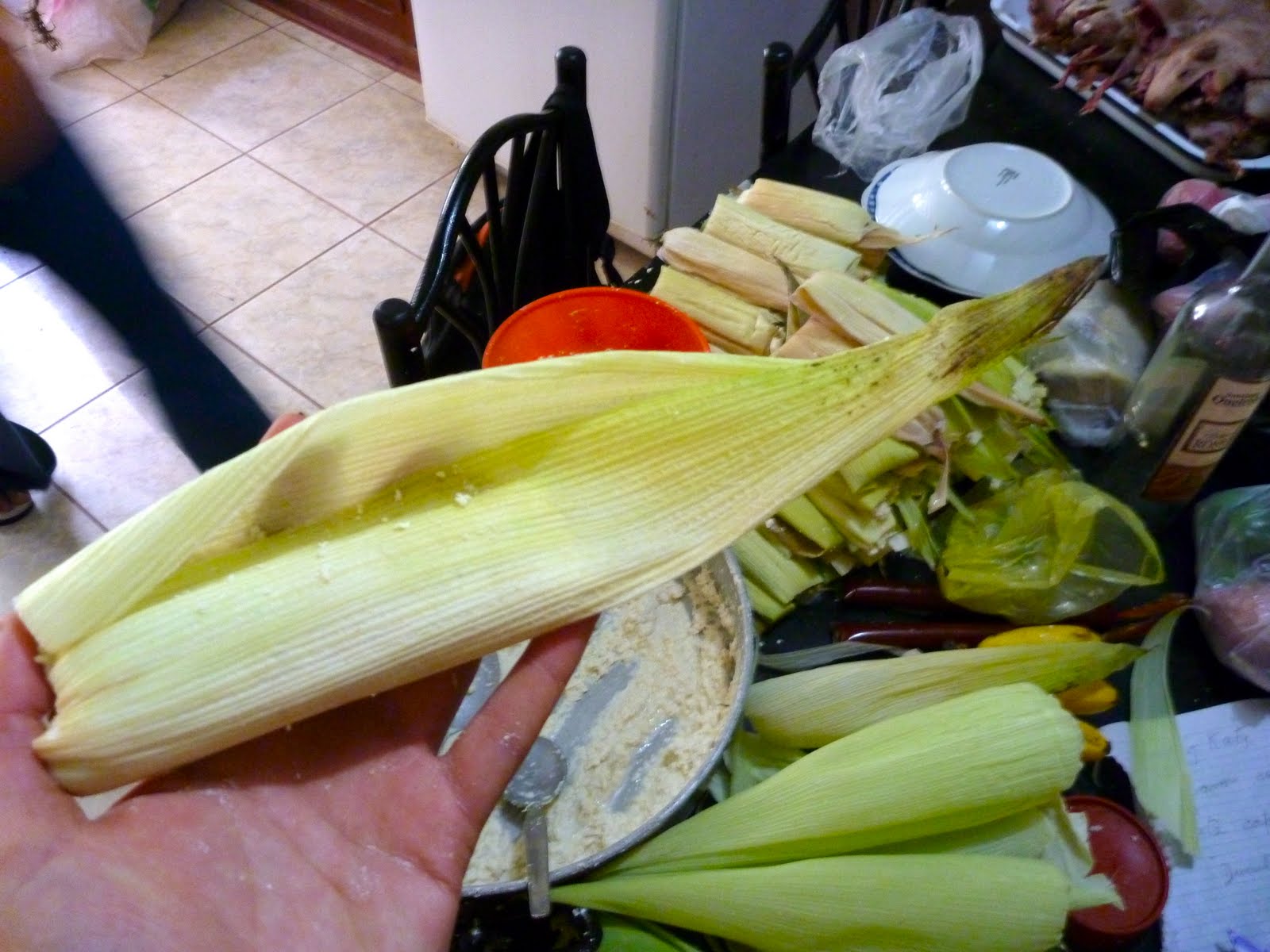
These are a little step up from the Costco tamales I adored when I was a kid.

Humitas can be filled with whatever your little heart desires, and the butter and sugar in the batter makes them a little desserty. Their name means "little steamed thing".

HUMITAS PERUANAS

Ingredients:
-Corn husks (you may find these at a Mexican grocery)
-1 kilo choclo (large, slightly starchy Peruvian corn). You can buy Mexican dried corn and rehydrate it for the same effect.
-1 egg
-sugar to taste (About a 1/4 c. depending on how sweet you want them)
-50 g. butter, softened
-1.5 tsp. salt
-Fillings, anything from cheese to raisins to chicken.

Directions:

Grind the corn. I used a medieval-looking hand cranked grinder, but you can just use your food processor. Make it smooth as possible.


Mix all the ingredients together in a bowl until well integrated. Take your corn husks, and rip them in half (humitas tend to be fairly small). Holding the husk, take a spoon and get a heaping dollop of the corn mixture. Spread this on the lower half of the husk (the part that would be the base of the corn) in a rectangle, the horizontal plane a little bigger than the vertical. The filling should leave room on the left side. Drop a little filling off-center to the right (here we used queso fresco). Fold the right side over the left so the right and left sides of the corn mix meet and the filling is covered, fold the top of the husk down so the corn filling is contained on the top, then fold the left side over the right. You should have a little packet of tamale now!


Bring a large pot of water to a boil, and drop all the tamales in. Boil for an hour or until cooked. These are really tasty with a spicy salsa dumped on them. Here, my favorite thing to eat them with is ají, a slightly spicy sauce made with cheese, sautéed ají amarillo peppers, saltines, milk, and water.


Estos son un paso adelante de los tamales del supermercado Costco que adoré cuando era niña.

Se puede llenar humitas con cualquier cosa deseas, y la mantequilla y azúcar en la maza las hacen un poco como postre.

HUMITAS PERUANAS

Ingredientes:
·Hojas de maíz
·1 kilo choclo (o cualquier tipo de maíz fresco o cocido)
·1 huevo
·azucar, al gusto
·50 gramas mantequilla, ablandada
·1.5 cucharilla sal
·Relleno, sea queso, pasas, pollo deshilachado

Direcciones:

Muela el choclo. Usé un molinero de mano, pero podrías usar procesador de alimentos. Hagalo muy suave.

Mezcla bien todos los ingredientes menos el relleno. Toma las hojas de maíz, y arráncalas en mitad (humitas suelen ser pequeños). Cargando la hoja en tu mano, ponga una cucharada grande de la mezcla de choclo. Extiéndase en el parte del fondo de la hoja (donde hay más espacio) en la forma de rectángulo. Ponga un poco de relleno al parte de la derecha (aquí usamos queso fresco). Dobla el lado de la derecha a la izquiera para que el choclo cubre completamente el relleno, y dobla el parte superior de la hoja hacia el fondo para contener el parte arriba del choclo, y después dobla el parte de la izquierda de la hoja a la derecha. Ya debes tener un paquetito de humita!

Hierve una olla grande de agua, y ponga todas las tamales en el agua. Hierven para una hora, o hasta están cocidas.

Están muy saborosas con salsas picantes. Mi salsa favorita es ají, una salsa Peruana de pimientos ají.

Tuesday, November 15, 2011

Red & Green

I'm just writing to share some wonderful Peruvian discoveries.

#1:

Red bananas! Nothing special, they taste like regular bananas. Maybe they're a little bigger. But they're red, which automatically makes them taste better.

The unripe ones are used to make a Peruvian soup called "Churumbo"


#2

Green tea...from Perú?? That's right, it was grown and processed in Cuzco, and tastes just like a standard & decent Chinese tea.


Friday, November 4, 2011

Who doesn't love a good pickle? (Nabos encurtidos Limeños) English & Español

Mire por abajo para Español.

And by pickle, I don't just mean cucumbers.

Here are some Lima-style "oshinko", or Japanese pickles. I found this style of oshinko randomly in a Lima supermarket, it was a little shocking. And even more shocking, I found daikon radish in my market one day in my little Andean town. This recipe combines ají amarillo peppers (a Peruvian staple) with thin-sliced daikon in a simple pickling liquid.


LIMA-STYLE OSHINKO

Veggies:
-3 small daikon radish or 1 huge one, sliced in thin rounds
-2 medium-side fresh ají amarillo peppers, deseeded, cut in half lengthwise then again crosswise, and thinly sliced into sticks. If you can't find these, any sweet & mildly spicy pepper will do. For a not-spicy version use orange bell pepper, and for spicy one use jalapeño.

Pickling liquid:
-1 c. white wine vinegar
-1 c. water
-1 tsp. salt
-1/2 Tbs. sugar or honey

Other stuff:
-1 large jar (I used a jelly jar that held 1kg. of jelly).


Boil your jar in water or pour boiling water over it to make sure that it's sanitized.

Bring your pickling liquid to a boil on the stove. Use a lid if you don't want the house to smell like vinegar.

Layer the daikon and ají in your jar (fill it with a portion of daikon, then of ají, and so on) until your jar is filled.

Pour the pickling liquid over the top until it reaches the shoulder of the jar. Put the lid on and shake & tap the jar until all the air bubbles come up from the bottom. Then pour the rest of your pickling liquid in.

Put the cap on, refrigerate, and it should be ready to eat in a day! It tastes better if you give it a week or so to mellow though :)


Digo "encurtidos", pero no solamente los de pepinos que comimos en los EEUU.

Aquí tenemos "daikon no oshinko" del estilo Limeño, o nabos encurtidos. Daikon = rábano japonés (en Perú, nabo). Oshinko = encurtidos. Al azar, encontré este tipo de oshinko en el supermercado en Lima, y fue un poco espantoso. Y lo más espantoso es que encontré este nabo en mi pequeño pueblo en los Andes. Esta receta combina ají amarillos y rodajas de nabo en un liquido sencillo de encurtidos.

NABOS ENCURTIDOS LIMEÑOS

·3 nabos pequeños o 1 grande, cortado en rodajas muy delgadas
·2 ají amarillos, quitado de semillas y cortado en trozos largos y delgados. Jalapeños tambien se puede usar

el liquido:
·1 taza vinaigre blanco
·1 taza agua
·1 cucharilla sal
·1/2 cucharón miel de abeja o azúcar

Tambien necesita una jarra (mio contuvo 1 kilo de mermelada).

Hierve la jarra y la tapa en agua para unos minutos, para desinfectarlas.

En otra olla, hierve todas las ingredientes del parte liquido. Usa una tapa, si no quieres que tu casa huele de vinaigre :P

Ponga las rodajas de nabo y trozos de ají en la jarra en capas (una capa de nabo, una de ají, y así sucesivamente hasta la jarra está llena).

Vierta el liquido hervido en la jarra hasta la paletilla. Ponga la tapa y agita la jarra para que las burbujas de aire suben del fondo. Ya vierta el resto del liquido en la jarra.

Ponga la tapa, y ponga en el refri. Está listo para comer después un día, pero es más rico después de una semana. Disfruta!

Wednesday, October 12, 2011

Spiny, creepy things...(la caigua chilena, en Inglés y Español)

(Mire por abajo para Español)

Once upon a time in Peru, my host dad came home towing a vine-full of spiny, dirty, green things...

so I cooked them!


The caigua chilena is an anomaly, I couldn't find anything on it online--when you search the internet, it only comes up with "caigua", and it's a different vegetable.

I was using the oven for something else and kind of annoyed that this pokey thing was taking up all my kitchen space, so I chucked them into an empty shelf in the oven

And out came something delicious! The peel and seed came right off, and I was left with something that was a weird mix between an artichoke, Chinese winter melon, and chayote.


The first time I made it I made this crazy spicy orange sauce from basically everything that was in our fridge, cooked chopped caigua chilena in it, and covered the whole thing in cheese--my family loved it.

This time, I cooked it for an hour in the pressure cooker (the thing wasn't only spiny, it was a brick), took off the peel and seed, chopped it, fried it, and put it in a Chinese "mapo" (麻婆) sauce that I learned from my host mom in Japan.

and BAM! Chinese food deliciousness!


"Mapo Caigua"

-3 caiguas, boiled until completely tender, with the skin and seed removed
-1 onion, cut in big chunks
-vegetable oil for frying the caigua

SAUCE:
-1 tsp. tojan chili sauce or Chinese pepper garlic sauce
-1/2 onion, minced
-1 inch. chunk of peeled ginger, minced
-5 cloves garlic, minced
-1 Tbs. sake
-1/3 c. white or rice vinegar
-1/2 tsp. salt
-1/4 tsp pepper
-1/2 c. water mixed with 1/2 Tbs. corn starch
-3 Tbs. soy sauce

METHOD:
Cut the caigua into big chunks, and fry in oil until golden brown. Set on paper towel to drain.

Mix all the ingredients for the sauce BUT the water with starch and soy sauce together in a bowl. Set aside.

Put a pot over medium-high heat, and pour 2 Tbs. sesame oil in the pot. When the oil is hot (you can smell it), throw the chopped onion into the oil, and cook until it begins to turn brown (but not so that it starts shrinking). Add the caigua and the prepared sauce, and stir. Cook for 5 minutes over medium heat. Clear a spot in the pot, and drop the soy sauce in--it should start boiling immediately. After a few seconds, stir it in. While stirring it so the starch doesn't clump, add the water with starch. Cook over medium-high heat until it thickens, about 5 minutes.

Serve over piping hot rice, and maybe with some fried wonton skins :)


NOTE!
I realize that a caigua chilena will not be sold in your local piggly-wiggly. That said, this recipe would go wonderfully with a chayote, which you should find at any local Latin-food store. Otherwise, just make it the traditional with pan-fried tofu and it is equally delicious. Use your imagination--just about every other vegetable out there would be delicious with this.


ESPAÑOL

Una vez, mi padre anfitrión trajo a la casa una vina llenada de cosas espinadas, sucias, y verdes.

entonces las cociné!

La caigua chilena es anomalía, no pude encontrar nada sobre lo por internet. Cuando buscas, solamente viene páginas de la caigua, una verdura muy diferente.

Yo estaba usando el horno, y le me molestaba solamente sentando en la encimera, pues se eché adentro el horno.

...¡y salió algo rico! La piel y la semilla se separaron fácilmente, y dejo algo parecido a una mezcla extraña de alcachofa, chayote, y melón de invierno (benincasa hispida, un tipo de melón de Asia).

La primera vez que los cociné, hice una salsa picante de ají amarillo y queso. La familia anfitriona le gustó

La segunda vez, los herví en la olla de presión para cerca de una hora, y los guisé como una comida china, "Mapo". Usualmente mapo contiene carne molida y carne de soya, pero la salsa tambien se puede usar con otras cosas.


MAPO CAIGUA

-3 caiguas chilenas, hervidas, con la piel y semilla sacadas
-1 cebolla, picada
-Aceite para freír las caiguas

Para la salsa:
-1 cucharilla chile fresco molido (como rocoto o jalapeño)
-Mitad de una cebolla, picada muy fina
-2 pulgadas de jengibre pelado, picada muy fina
-5 dientes ajo, picados
-1 Tbs. sake (vino de arroz), o otro liquor blanca como pisco
-1/3 taza vinaigre blanco
-1/2 cucharilla sal
-1/4 cucharilla pimienta
-1/2 taza agua, mezclado con 1/2 cucharón fécula de maíz
-3 cucharones de salsa de soya (sillao)

Direcciones:

Corta las caiguas en cubos, y fríen en el aceite hasta están doradas. Ponga en una toalla de papel para que puede escurrir el aceite.

Mezcla todas las ingredientes EXCEPTO el agua con fécula en un plato ondo, y dejarlo a un lado.

Ponga una olla sobre fuego medio, y vierta 2 cucharones de aceite de ajonjolí adentro. Cuando está caliente (y puede olerlo), se echa la cebolla, y cocine hasta pone dorada. Añada la caigua y la salsa preparada, y revuelva para 5 minutos. Añada la salsa de soya, y mezclarlo. Revueva el agua con fécula de nuevo, y agregue a la olla. Cocine sobre fuego medio-fuerte hasta cuando la salsa hace gruesa.

Sirve encima de arroz caliente, y talvez wontons fritos :)


NOTA:
Porque el sabor no es muy fuerte (es poco dulce, y la textura es suave), se puede usar la caigua chilena en vez de otras verduras en cualquier plato. Pienso que sea rica en salsas italianas (como de espagueti), o en platos saltados asiáticos.