Showing posts with label vegetarian. Show all posts

Wednesday, November 30, 2011

Peruvian Purple Potatoes

This combines all my favorite things, especially the toasted sesame seed dressing.

Check out this Peruvian purple sweet potato, it's gorgeous!


QUINOA, SWEET POTATO, AND SESAME SALAD

Ingredients:
-1 sweet potato (whatever color :D), cubed
-1 carrot, peeled and chopped
-1/2 red onion, chopped
-1 jalapeño pepper with seeds removed, minced
-6 cloves garlic, minced
-1/2 avacado, chopped and tossed with the juice of 1 lime
-salt & pepper, to taste
-1.5 c. quinoa, washed and soaked for 10 minutes

-->Dressing:
-1/2 c. sesame seeds, toasted
-1/2 c. olive oil
-2 Tbs. vegetable oil
-2 Tbs. soy sauce
-1/2 tsp. salt
-1/4 tsp. pepper


Directions:

After soaking, put the quinoa to boil with 3 c. fresh water and 1.5 tsp. salt. When boiling, turn heat to medium-low and simmer for 15-20 min, or until all the water is absorbed. Cut the heat and let sit for 10 minutes.

Meanwhile, heat 3 Tbs oil in a pot over medium-high heat. Put in the sweet potato, and fry for about 7 minutes, until it starts taking on color. Add the carrots, and cook for a couple more minutes, or until the carrots take on color. Add the onion, and cook for another 2 minutes. Then add the diced pepper and garlic, and cook 1 min. Turn off heat and add salt & pepper.

After toasting the sesame seeds, put in a blender with the rest of the salad ingredients. Pulse 5 times, so that some seeds remain whole but the dressing is liquidy.

Add the dressing to the quinoa and integrate. Let all the elements cool, then mix together in a bowl with the avocado. Serve at room temperature.

By the way, this dressing is delicious with absolutely everything, I especially like it with cucumber salad :)

Monday, November 21, 2011

Humitas Peruanas (sweet tamales) - English & Español

Para Español, mire por abajo

These are a little step up from the Costco tamales I adored when I was a kid.

Humitas can be filled with whatever your little heart desires, and the butter and sugar in the batter makes them a little desserty. Their name means "little steamed thing".

HUMITAS PERUANAS

Ingredients:
-Corn husks (you may find these at a Mexican grocery)
-1 kilo choclo (large, slightly starchy Peruvian corn). You can buy Mexican dried corn and rehydrate it for the same effect.
-1 egg
-sugar to taste (About a 1/4 c. depending on how sweet you want them)
-50 g. butter, softened
-1.5 tsp. salt
-Fillings, anything from cheese to raisins to chicken.

Directions:

Grind the corn. I used a medieval-looking hand cranked grinder, but you can just use your food processor. Make it smooth as possible.


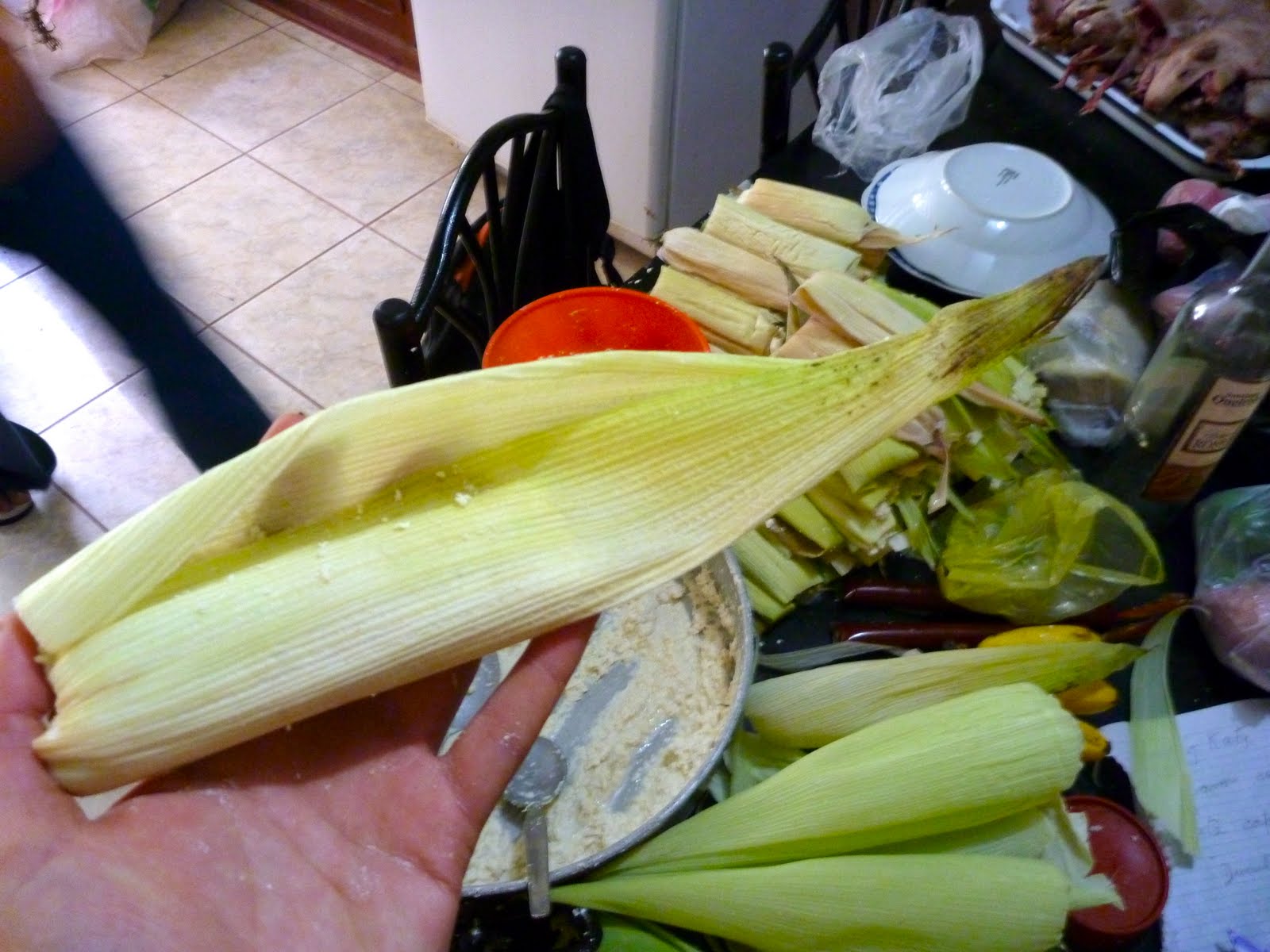
Mix all the ingredients together in a bowl until well integrated. Take your corn husks, and rip them in half (humitas tend to be fairly small). Holding the husk, take a spoon and get a heaping dollop of the corn mixture. Spread this on the lower half of the husk (the part that would be the base of the corn) in a rectangle, the horizontal plane a little bigger than the vertical. The filling should leave room on the left side. Drop a little filling off-center to the right (here we used queso fresco). Fold the right side over the left so the right and left sides of the corn mix meet and the filling is covered, fold the top of the husk down so the corn filling is contained on the top, then fold the left side over the right. You should have a little packet of tamale now!


Bring a large pot of water to a boil, and drop all the tamales in. Boil for an hour or until cooked. These are really tasty with a spicy salsa dumped on them. Here, my favorite thing to eat them with is ají, a slightly spicy sauce made with cheese, sautéed ají amarillo peppers, saltines, milk, and water.


Estos son un paso adelante de los tamales del supermercado Costco que adoré cuando era niña.

Se puede llenar humitas con cualquier cosa deseas, y la mantequilla y azúcar en la maza las hacen un poco como postre.

HUMITAS PERUANAS

Ingredientes:
·Hojas de maíz
·1 kilo choclo (o cualquier tipo de maíz fresco o cocido)
·1 huevo
·azucar, al gusto
·50 gramas mantequilla, ablandada
·1.5 cucharilla sal
·Relleno, sea queso, pasas, pollo deshilachado

Direcciones:

Muela el choclo. Usé un molinero de mano, pero podrías usar procesador de alimentos. Hagalo muy suave.

Mezcla bien todos los ingredientes menos el relleno. Toma las hojas de maíz, y arráncalas en mitad (humitas suelen ser pequeños). Cargando la hoja en tu mano, ponga una cucharada grande de la mezcla de choclo. Extiéndase en el parte del fondo de la hoja (donde hay más espacio) en la forma de rectángulo. Ponga un poco de relleno al parte de la derecha (aquí usamos queso fresco). Dobla el lado de la derecha a la izquiera para que el choclo cubre completamente el relleno, y dobla el parte superior de la hoja hacia el fondo para contener el parte arriba del choclo, y después dobla el parte de la izquierda de la hoja a la derecha. Ya debes tener un paquetito de humita!

Hierve una olla grande de agua, y ponga todas las tamales en el agua. Hierven para una hora, o hasta están cocidas.

Están muy saborosas con salsas picantes. Mi salsa favorita es ají, una salsa Peruana de pimientos ají.

Sunday, November 20, 2011

Black beans two ways

I bought a 1/2 kilo of black beans yesterday wanting a salad and Chinese sweets.

Remember my last post with the Cantonese egg custard buns? I use the same dough, there are many variations in flavors of the same Chinese steamed bread.

BLACK BEAN AND CILANTRO MINT CREAM SALAD

Ingredients:
-1/4 kilo black beans, cooked
-1 tomato, diced
-2 cloves garlic
-3 green onions, roughly chopped
-1/2 tsp salt
-1/4 tsp pepper
-1 tsp. minced hot pepper-habañero is best
-1/4 c. cilantro (stems and leaves) roughly chopped
-5 large mint leaves
-1/2 c. chopped mozzarella cheese
-hot water

Directions:
Put all ingredients but black beans and tomato into a blender, and pour the hot water in until it just covers the tops of the vegetables. Blend until smooth.


Put the black beans in a pot over medium-high heat. Pour the blender mixture in, bring to a boil, then turn the heat to medium and simmer until the sauce becomes thick, 5-7 minutes.

Pour this mixture into a bowl and let cool. Put in the diced tomato and eat at room temperature.


CHINESE SWEET BLACK BEAN BUNS (an offshoot of red-bean buns, dou-sha bao 豆沙包)

Ingredients:
DOUGH
-3 c. flour
-1 tsp. salt
-1 Tbs. butter
-1 c. + 2 Tbs. warm water
-1/4c. sugar (I used brown)
-1.5 tsp. yeast

FILLING
-1/4 kilo cooked black beans
-2 c. brown sugar

Directions:
Wash the cooked black beans and put in a pressure cooker. Cover with fresh water until an inch above the tops of the beans. Bring to a boil, then pressure-cook on medium heat for about 20 minutes, or until the beans are beginning to fall apart (if using a regular pot, this will probably take an hour to achieve the same effects). When finished cooking, drain and wash beans again. Return to a regular pot, add the sugar, and put in enough water until just above the tops of the beans. Bring to a simmer on medium-low heat, then simmer until cooked down into a sugary paste, about 30 minutes. In the last 15 minutes, watch and stir the pot to make sure the beans do not burn. The beans should be broken down, but chunky. Set aside to cool.

To make the dough, mix the water with the sugar and bloom the yeast in this. In a larger bowl, mix the flour and salt. Pour the bloomed yeast into the flour, add the butter, and knead for 10 minutes (or until elastic) and set aside under a wet wash-cloth to rise for an hour.

When the dough has risen, punch it down and divide into 12 pieces. One at a time, roll the pieces into 3 inch circles and fill with a tablespoon of bean paste. Pinch the dough around the paste and twist to make a ball and set aside under a moist cloth. Meanwhile, bring water to boil under a steamer. Steam the buns for about 13 minutes or until springy.

Tuesday, November 1, 2011

Mayonaissey

This is really difficult, so hold onto your pants:

Egg + salt + veggie oil = mayonnaise!

I spiffed it up a little, but if you've never had homemade mayo, you should feel obligated to try this:

INGREDIENTS:
-1 egg
-1 egg yolk
-1/4 tsp salt, or to taste
-about 1/2 c. vegetable oil
-1/2 a key lime, or 1/4 a regular one
-1 tsp. vinegar

Put the eggs and salt into a blender, and turn it on to medium speed. When mixed and while the blender is still going, slowly pour in all the oil in a thin stream. When finished pouring, let the blender run for another half minute to a minute. The mayo should be nice an fluffy as mayo is. Add the juice of your lime and the vinegar, blend to mix, and eat!


For using it, here's a good recipe. Remember that okara from my last post, the leftovers from making tofu? I use this to make a "tuna" salad sandwich.

CHICKEN OF THE...BEAN?

INGREDIENTS:
-1/2 a carrot, diced
-1/2 a stalk of celery, diced
-1/2 a spring onion, sliced
-a spoonful of edamame
-1/2 c. okara
-2 Tbs. mayonnaise
-1/4 tsp. pepper
-1 garlic clove, minced
-a pinch of cumin
-1 tsp. vinegar
-1/2 tsp. Chinese chili-garlic sauce

Mix it all up! I ate mine with whole wheat sandwich bread toasted with mozzarella cheese and tomato slices (like a tuna melt :D)

Monday, October 31, 2011

Homemade tofu without all that fancy Japanese stuff

Yes, I made tofu in Perú.

It just so happened that one of the local shops was selling soy beans, so I picked some of those suckers up.

Of course, I had no fancy Japanese tofu molds or imported nigari (coagulant) or cheesecloth. So all of the following should be what you can do from your own home-sweet-home without ordering anything from the internet.

My recipe uses a T-shirt (for straining), a plastic colander & tupperware container with holes poked in it (molds), and plain-old white vinegar. Suuuuper cheap. The whole process takes about 2 hours, so if I was in the US I probably wouldn't go through the trouble. But seeing as there is no tofu here in the farmlands of Perú, it'll be worth it once & a while I think. Pardon the pictures, they were taken at night with an old camera :/


First we'll make soymilk, mmm. Warning: this does not taste like Silk unless you water it down and add lots of vanilla and sugar.

STEP 1:

Wash and pick through 500g. soy beans (a little over a pound), and leave them to soak 8 hours or overnight (change the water a couple times).

STEP 2:

Put 16 cups of water on to boil. I used a huge industrial pot for this, you may need to use 2 different pots.

STEP 3:


Discard the soaking liquid from the beans, and put a couple of cupfuls at a time in a blender, filling to a little above the beans with water (just so that the blender can work well). Blend a few minutes until nearly smooth. It turns into a really thick goo. Do this until all your beans are blended. Pour this mixture into the boiling water and turn it to medium heat. Stir this mixture constantly for about 20 minutes. The foam is normal, so if it starts to boil over remove briefly from the heat or sprinkle a little cold water over the top. But stirring constantly should help.


STEP 4:


Turn off the heat and strain. I used an old T-shirt to strain the soymilk into a large bowl. Make sure all the liquid is strained, then put the solids (okari) into a separate bowl. I like to eat this with ginger and soy sauce, it's super good for you.


STEP 5:


Put the soymilk back into your pot, and turn it onto medium-low heat. Sprinkle about a tablespoon of white vinegar over the top, stir, and wait a few minutes. Repeat this process until your curds have separated from the yellowish & watery whey. I wasn't measuring the vinegar, but I'm going to guesstimate that I used about a quarter of a cup of vinegar. Let the curds & whey sit for 15-20 minutes.

STEP 6:

Line the colander with your T-shirt, put it in a container to catch the whey, then pour the contents of your pot into the colander. Squeeze the excess whey from the shirt and twist the shirt so that most of the excess liquid comes off from the curds. Discard the liquid.

STEP 7:


Put your colander with curds inside of another bowl (one that fits so the bottoms don't touch--you want the water to drip away from the tofu). On top of your curds, put a fitting lid or plate, then put a bowl filled with the okari or water on top of THAT as a weight. Let sit for 10-30 minutes, depending on how soft you want your tofu.

STEP 8:

EAT YOUR DELICIOUS TOFU! It's lovely just plain with soy sauce on top. It stays for a few days, and if you don't eat it immediately put it in water and keep it in the refrigerator.

Wednesday, October 12, 2011

Spiny, creepy things...(la caigua chilena, en Inglés y Español)

(Mire por abajo para Español)

Once upon a time in Peru, my host dad came home towing a vine-full of spiny, dirty, green things...

so I cooked them!


The caigua chilena is an anomaly, I couldn't find anything on it online--when you search the internet, it only comes up with "caigua", and it's a different vegetable.

I was using the oven for something else and kind of annoyed that this pokey thing was taking up all my kitchen space, so I chucked them into an empty shelf in the oven

And out came something delicious! The peel and seed came right off, and I was left with something that was a weird mix between an artichoke, Chinese winter melon, and chayote.


The first time I made it I made this crazy spicy orange sauce from basically everything that was in our fridge, cooked chopped caigua chilena in it, and covered the whole thing in cheese--my family loved it.

This time, I cooked it for an hour in the pressure cooker (the thing wasn't only spiny, it was a brick), took off the peel and seed, chopped it, fried it, and put it in a Chinese "mapo" (麻婆) sauce that I learned from my host mom in Japan.

and BAM! Chinese food deliciousness!


"Mapo Caigua"

-3 caiguas, boiled until completely tender, with the skin and seed removed
-1 onion, cut in big chunks
-vegetable oil for frying the caigua

SAUCE:
-1 tsp. tojan chili sauce or Chinese pepper garlic sauce
-1/2 onion, minced
-1 inch. chunk of peeled ginger, minced
-5 cloves garlic, minced
-1 Tbs. sake
-1/3 c. white or rice vinegar
-1/2 tsp. salt
-1/4 tsp pepper
-1/2 c. water mixed with 1/2 Tbs. corn starch
-3 Tbs. soy sauce

METHOD:
Cut the caigua into big chunks, and fry in oil until golden brown. Set on paper towel to drain.

Mix all the ingredients for the sauce BUT the water with starch and soy sauce together in a bowl. Set aside.

Put a pot over medium-high heat, and pour 2 Tbs. sesame oil in the pot. When the oil is hot (you can smell it), throw the chopped onion into the oil, and cook until it begins to turn brown (but not so that it starts shrinking). Add the caigua and the prepared sauce, and stir. Cook for 5 minutes over medium heat. Clear a spot in the pot, and drop the soy sauce in--it should start boiling immediately. After a few seconds, stir it in. While stirring it so the starch doesn't clump, add the water with starch. Cook over medium-high heat until it thickens, about 5 minutes.

Serve over piping hot rice, and maybe with some fried wonton skins :)


NOTE!
I realize that a caigua chilena will not be sold in your local piggly-wiggly. That said, this recipe would go wonderfully with a chayote, which you should find at any local Latin-food store. Otherwise, just make it the traditional with pan-fried tofu and it is equally delicious. Use your imagination--just about every other vegetable out there would be delicious with this.


ESPAÑOL

Una vez, mi padre anfitrión trajo a la casa una vina llenada de cosas espinadas, sucias, y verdes.

entonces las cociné!

La caigua chilena es anomalía, no pude encontrar nada sobre lo por internet. Cuando buscas, solamente viene páginas de la caigua, una verdura muy diferente.

Yo estaba usando el horno, y le me molestaba solamente sentando en la encimera, pues se eché adentro el horno.

...¡y salió algo rico! La piel y la semilla se separaron fácilmente, y dejo algo parecido a una mezcla extraña de alcachofa, chayote, y melón de invierno (benincasa hispida, un tipo de melón de Asia).

La primera vez que los cociné, hice una salsa picante de ají amarillo y queso. La familia anfitriona le gustó

La segunda vez, los herví en la olla de presión para cerca de una hora, y los guisé como una comida china, "Mapo". Usualmente mapo contiene carne molida y carne de soya, pero la salsa tambien se puede usar con otras cosas.


MAPO CAIGUA

-3 caiguas chilenas, hervidas, con la piel y semilla sacadas
-1 cebolla, picada
-Aceite para freír las caiguas

Para la salsa:
-1 cucharilla chile fresco molido (como rocoto o jalapeño)
-Mitad de una cebolla, picada muy fina
-2 pulgadas de jengibre pelado, picada muy fina
-5 dientes ajo, picados
-1 Tbs. sake (vino de arroz), o otro liquor blanca como pisco
-1/3 taza vinaigre blanco
-1/2 cucharilla sal
-1/4 cucharilla pimienta
-1/2 taza agua, mezclado con 1/2 cucharón fécula de maíz
-3 cucharones de salsa de soya (sillao)

Direcciones:

Corta las caiguas en cubos, y fríen en el aceite hasta están doradas. Ponga en una toalla de papel para que puede escurrir el aceite.

Mezcla todas las ingredientes EXCEPTO el agua con fécula en un plato ondo, y dejarlo a un lado.

Ponga una olla sobre fuego medio, y vierta 2 cucharones de aceite de ajonjolí adentro. Cuando está caliente (y puede olerlo), se echa la cebolla, y cocine hasta pone dorada. Añada la caigua y la salsa preparada, y revuelva para 5 minutos. Añada la salsa de soya, y mezclarlo. Revueva el agua con fécula de nuevo, y agregue a la olla. Cocine sobre fuego medio-fuerte hasta cuando la salsa hace gruesa.

Sirve encima de arroz caliente, y talvez wontons fritos :)


NOTA:
Porque el sabor no es muy fuerte (es poco dulce, y la textura es suave), se puede usar la caigua chilena en vez de otras verduras en cualquier plato. Pienso que sea rica en salsas italianas (como de espagueti), o en platos saltados asiáticos.